
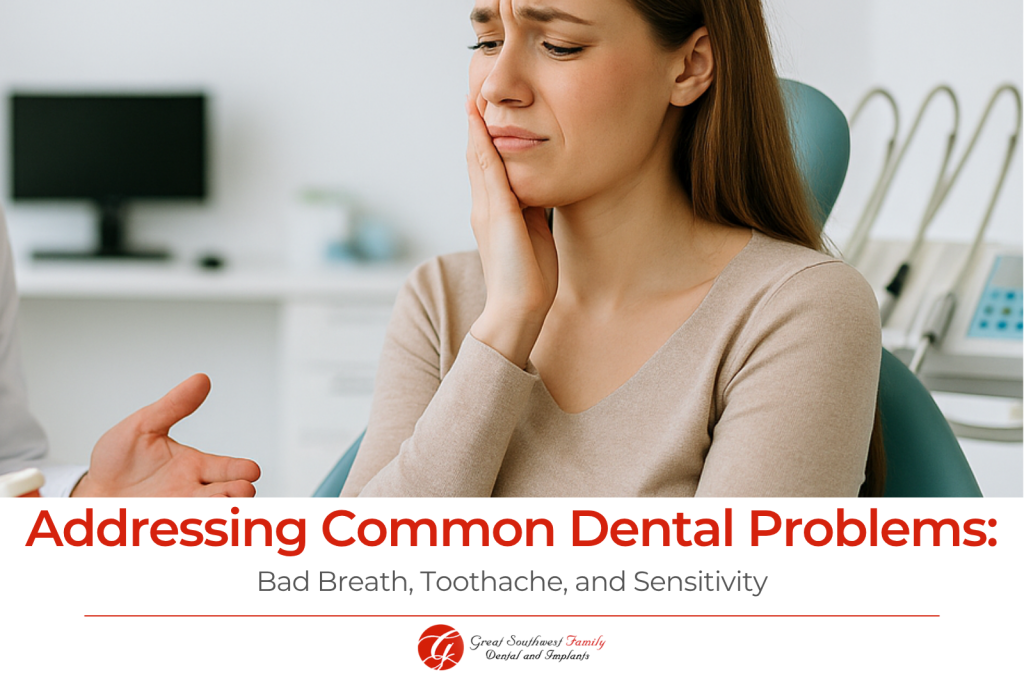
Everyone experiences dental discomfort at some point in their lives—whether it’s bad breath before a big meeting, a nagging toothache that won’t go away, or a sudden jolt of sensitivity when sipping coffee or ice water. These common issues may seem minor, but they can indicate underlying oral health problems that need professional attention. At Great Southwest Family Dental, our goal is to help you understand these conditions, identify their causes, and know when to seek treatment.
Bad Breath (Halitosis)
Bad breath, or halitosis, can be caused by several factors—ranging from poor oral hygiene to more serious dental or medical issues.
Common causes include:
- Bacteria buildup on the tongue or teeth
- Gum disease (gingivitis or periodontitis)
- Dry mouth (often due to medications or dehydration)
- Food particles trapped between teeth
- Smoking or tobacco use
- Sinus infections or tonsil stones
How to fix it:
Brushing and flossing daily, using antibacterial mouthwash, and cleaning your tongue can help. However, if bad breath persists, it could be a sign of infection or gum disease. Our dentists can perform a comprehensive exam and cleaning to remove buildup and determine if further treatment is necessary.
Toothache
A toothache is one of the most common reasons patients visit the dentist. It may range from mild discomfort to severe pain, often signaling an issue with the tooth’s nerve or structure.
Possible causes:
- Tooth decay (cavity)
- Cracked or broken tooth
- Abscess or infection
- Gum disease
- Impacted wisdom tooth
When to call the dentist:
If your toothache lasts more than a day or two, worsens with pressure, or is accompanied by swelling, fever, or ear pain, it’s time to schedule an appointment. Ignoring it can lead to more serious infections or tooth loss. At Great Southwest Family Dental, we can identify the source of your pain and provide prompt relief—whether through fillings, root canal therapy, or other restorative treatments.
Tooth Sensitivity
Tooth sensitivity occurs when the protective enamel layer wears down, exposing the underlying dentin. This can cause pain or discomfort when consuming hot, cold, sweet, or acidic foods and drinks.
Common causes:
- Enamel erosion from acidic foods or brushing too hard
- Gum recession exposing tooth roots
- Cracked or chipped teeth
- Worn fillings or crowns
- Teeth grinding (bruxism)
How to manage it:
Use toothpaste designed for sensitive teeth, avoid acidic beverages, and use a soft-bristled toothbrush. If symptoms persist, our team can apply fluoride varnishes, sealants, or recommend other treatments to strengthen enamel and protect exposed areas.
Prevention Tips for Common Dental Problems
- Brush twice daily with fluoride toothpaste
- Floss every day to remove trapped food particles
- Use an antibacterial mouthwash to reduce bacteria
- Visit your dentist regularly for cleanings and exams
- Limit sugary and acidic foods that erode enamel
- Stay hydrated to prevent dry mouth
- Avoid tobacco products, which harm teeth and gums
Q&A: Common Dental Concerns
Q: How often should I visit the dentist?
A: We recommend every six months for a cleaning and checkup. Some patients may need more frequent visits based on their oral health.
Q: Can bad breath mean I have gum disease?
A: Yes. Persistent bad breath often results from bacteria in the gums and can be an early sign of gingivitis or periodontitis.
Q: Why do I get cavities even though I brush regularly?
A: Brushing alone may not remove plaque between teeth. Flossing, using fluoride products, and maintaining a healthy diet are equally important.
Q: Is tooth sensitivity permanent?
A: Not always. Depending on the cause, professional treatments such as fluoride applications or dental bonding can reduce sensitivity.
Q: What should I do if my toothache suddenly goes away?
A: Don’t ignore it. Pain relief may indicate that the nerve has died, which can still lead to infection. Schedule an exam immediately.
Q: Can mouthwash replace brushing or flossing?
A: No—mouthwash helps control bacteria but cannot remove plaque or food debris like brushing and flossing can.
Contact Great Southwest Family Dental
If you’re experiencing bad breath, a toothache, or tooth sensitivity, don’t wait until it worsens. Our friendly and experienced dental team is here to restore your comfort and your smile.
📍 Address: 2308 Bardin Rd, Ste 100, Grand Prairie, Texas 75052
📞 Phone: (972) 660-8457
📱 Text Line: (972) 660-8457
🌐 Website: greatsouthwestfamilydental.com
📅 Request an Appointment: Click Here