
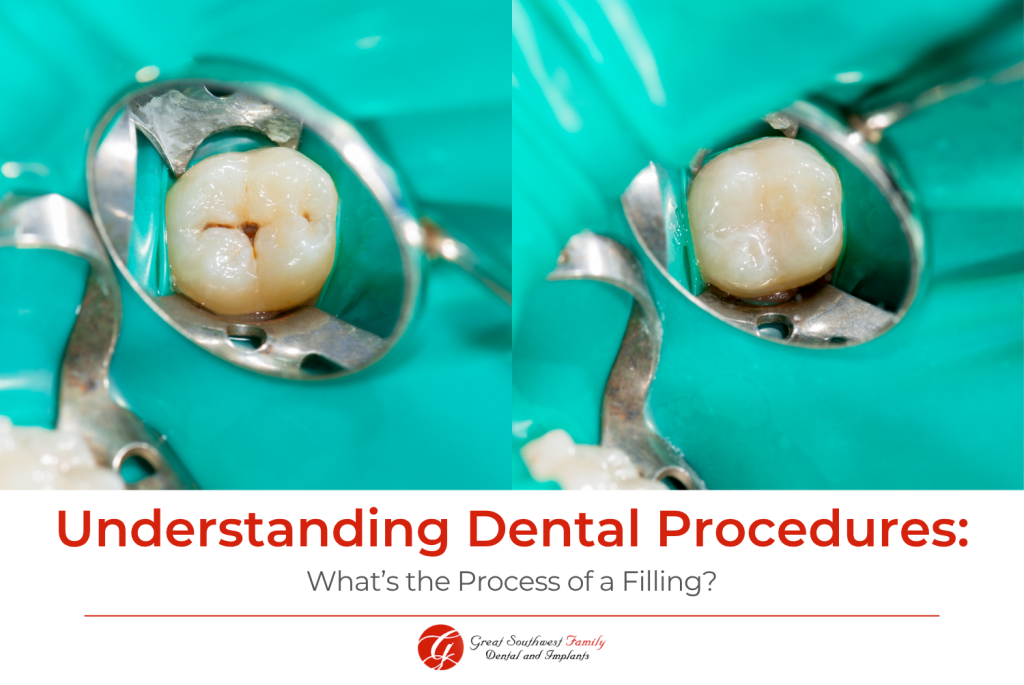
If you’ve ever had a cavity or damaged tooth, your dentist may have recommended a dental filling. Fillings are one of the most common restorative procedures performed in dental offices — quick, effective, and essential for maintaining long-term oral health. Yet, many patients feel nervous because they don’t know what to expect. At Great Southwest Family Dental, we believe that understanding your treatment helps reduce anxiety and builds confidence in your dental care.
Let’s walk through the process of a filling from start to finish, so you know exactly what happens during this routine procedure.
Step 1: Diagnosis and Preparation
Your dentist begins by examining your tooth and taking X-rays if needed to determine the extent of decay. Once it’s confirmed that a filling is necessary, the tooth and surrounding area are numbed with a local anesthetic. This ensures your comfort throughout the procedure — you shouldn’t feel pain, just mild pressure.
Step 2: Removing the Decay
Next, your dentist carefully removes the decayed or damaged portion of the tooth using precise dental instruments. This step prevents further decay and prepares a clean surface for the filling material. At Great Southwest Family Dental, we use gentle techniques and modern tools to make this process efficient and comfortable.
Step 3: Cleaning and Shaping the Cavity
Once the decay is removed, the dentist cleans the cavity thoroughly to eliminate any remaining bacteria or debris. The tooth is then shaped to ensure that the filling will bond securely and restore proper function.
Step 4: Placing the Filling Material
Depending on your needs, your dentist will select the right type of filling material — such as composite resin (tooth-colored), amalgam (silver), gold, or porcelain. Tooth-colored composite fillings are the most popular choice today because they blend seamlessly with your natural teeth.
The dentist applies the filling material in layers, using a special light to harden each layer. This technique helps create a strong and natural-looking restoration.
Step 5: Shaping and Polishing
After the filling is in place, the dentist trims and polishes it to match your natural bite and tooth contours. The result is a smooth, comfortable surface that looks and feels just like your original tooth.
Step 6: Aftercare and Recovery
Most patients can eat and drink normally once the numbness wears off. You may experience slight sensitivity to hot or cold for a few days, which typically subsides quickly. Proper brushing, flossing, and regular checkups will help your new filling last for many years.
Why Fillings Are Important
Even a small cavity can lead to serious dental issues if left untreated — including infection, pain, and tooth loss. Fillings stop decay, protect your tooth structure, and prevent the need for more extensive treatments like crowns or root canals later on.
At Great Southwest Family Dental, our team focuses on patient comfort and precision with every filling we perform. We take the time to explain each step, answer your questions, and ensure your smile stays strong and healthy.
Frequently Asked Questions (Q&A)
Q: How long does a filling appointment take?
Most dental fillings take about 30 to 60 minutes, depending on the size and location of the cavity.
Q: Will I feel pain during the procedure?
No — the tooth and surrounding area are numbed with local anesthesia. You may feel mild pressure but not pain.
Q: What materials are fillings made of?
Common materials include composite resin, amalgam, gold, and porcelain. Composite resin is the most natural-looking option and is widely used.
Q: How long do fillings last?
With good oral hygiene, composite fillings can last 5–10 years, while metal fillings may last longer. Regular dental visits help monitor their condition.
Q: Can I eat right after getting a filling?
Yes, but wait until the numbness fully wears off to avoid accidentally biting your cheek or tongue.
Q: What should I do if my filling feels uneven or painful?
If your bite feels “off” or you experience pain after a few days, contact our office. A quick adjustment can usually resolve the issue.
Q: Can cavities come back after a filling?
While the treated area is sealed, new decay can develop nearby if oral hygiene isn’t maintained. Brushing, flossing, and routine checkups are key to prevention.
Schedule Your Appointment Today
At Great Southwest Family Dental, we make dental care easy, gentle, and effective for the whole family. Whether you need a filling, cleaning, or full restorative care, our experienced team is here to help you achieve a healthy, confident smile.
📍 Address:
Great Southwest Family Dental
2308 Bardin Rd, Ste 100
Grand Prairie, Texas 75052
📞 Phone / Text: (972) 660-8457
🌐 Website: greatsouthwestfamilydental.com
🗓️ Request an Appointment: Click here