
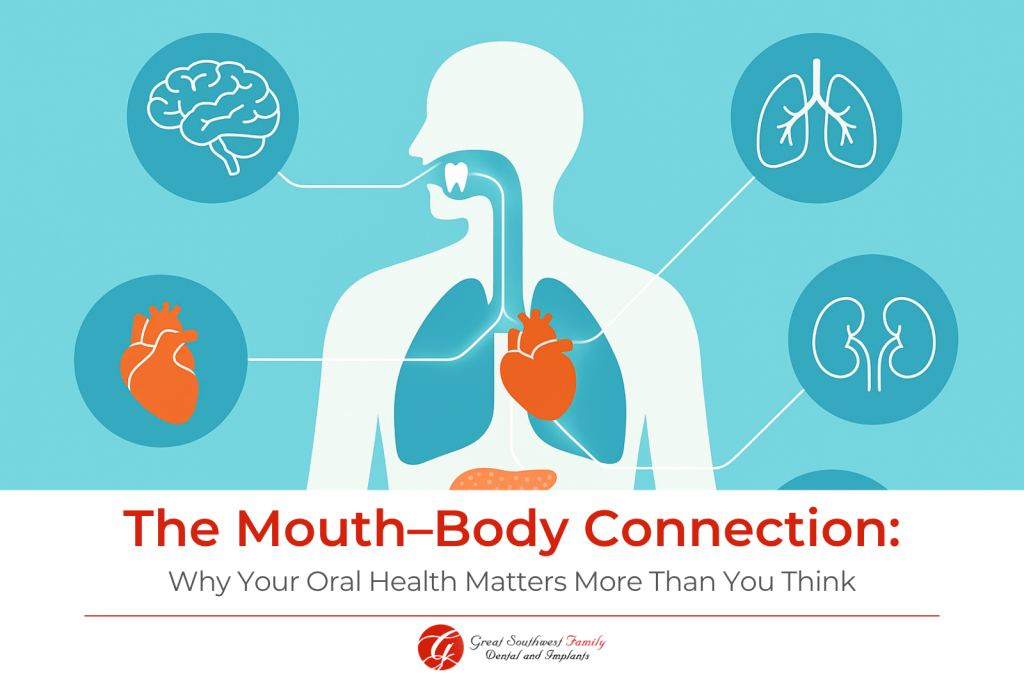
When you consider the major organs in your body—brain, heart, lungs, kidneys, liver, etc.—you might not immediately link them to your teeth or gums. But science increasingly shows there is a two-way relationship: poor oral health can negatively influence systemic health, and systemic disease can show signs in the mouth.
Here’s how the connection works, what the risks are, and what proactive steps you can take.
1. Mechanisms: How Oral Problems Can Affect Internal Organs
There are several biological pathways by which an unhealthy mouth may contribute to systemic problems:
- Bacteremia & microbial translocation
The mouth is full of bacteria—many harmless, some pathogenic. With gum disease or dental infections, these bacteria can occasionally enter the bloodstream (bacteremia). Once in circulation, they may travel to distant sites, contributing to inflammation or even seeding vulnerable tissues. PMC+2IFM+2 - Chronic systemic inflammation
Periodontal disease (gum disease) causes a sustained immune response. Inflammatory markers like C-reactive protein, interleukins, and tumor necrosis factor (TNF-α) can spill into the systemic circulation, contributing to vascular inflammation and damage. ScienceDirect+3PMC+3MDPI+3 - Immune dysregulation & oxidative stress
Altered immune responses, oxidative stress, and shifts in the balance of the oral microbiome (dysbiosis) can exacerbate systemic disease processes. NCBI+3PMC+3IFM+3 - Shared risk factors and bidirectionality
Many systemic diseases (e.g. diabetes, obesity, smoking, poor diet) share common risk factors with oral disease. In some cases, the relationship is bidirectional (e.g. diabetes worsens gum disease, gum disease may worsen glycemic control). CDC+3PMC+3NCBI+3
Because of these overlapping pathways, oral health is increasingly viewed as a modifiable risk factor in systemic disease.
2. Brain & Cognitive Health
One of the more concerning emerging links is between oral health and brain health, particularly memory and neurodegenerative disorders.
- Hippocampal shrinkage & cognitive decline
A study published in Neurology found that people with gum disease or tooth loss had greater shrinkage over time in the hippocampus (a brain region critical for memory). American Academy of Neurology
Although this association does not prove that gum disease causes Alzheimer’s or dementia, it suggests a possible contribution of chronic oral inflammation to brain aging. - Stroke risk
Poor oral hygiene, periodontal disease, and missing teeth have been associated with an increased risk of stroke. American Heart Association+2PMC+2
Bacteria or inflammatory signals may impair vascular health in the brain, promoting atherosclerosis or clot formation. - General cognitive decline
Chronic systemic inflammation is implicated in many neurodegenerative conditions; thus, sustained oral inflammation is hypothesized to accelerate cognitive decline.
3. Heart & Cardiovascular System
The heart and blood vessels are perhaps the most well-studied links to oral health. Below are several key findings and mechanisms:
- Atherosclerotic cardiovascular disease (ASCVD)
There is mounting evidence that periodontal disease is associated with a higher risk of ASCVD (atherosclerosis of arteries) and cardiovascular events. ScienceDirect+3PMC+3MDPI+3 - Reduced risk with good oral hygiene
Some studies suggest that brushing at least once per day or obtaining an annual professional dental cleaning is associated with a 9-14% reduction in cardiovascular risk. PMC+2PMC+2
Improved oral hygiene may help lower systemic inflammation, which in turn reduces vascular stress. OUP Academic+2PMC+2 - Endocarditis & infective lesions
In some cases, oral bacteria entering the bloodstream can infect the inner lining of the heart (endocardium), particularly in those with predisposing heart valve abnormalities. Though rare, this risk is recognized in medical practice. - Hypertension / heart disease associations
Some observational studies suggest that multiple tooth extractions, bleeding gums, and self-perceived poor oral health correlate with a higher prevalence of hypertension, hypercholesterolemia, or other chronic cardiac conditions. PLOS+2PMC+2
However, these associations may weaken after adjusting for confounders, highlighting the complexity of the relationships. PLOS - Heart failure (HF)
A recent study found that excellent oral hygiene (versus fair/poor) was associated with lower odds of heart failure. Frontiers
While causality is still under investigation, the weight of evidence suggests that maintaining good oral health may reduce cardiovascular risk.
4. Other Organs & Systems
Oral health influences many more systems beyond just brain and heart:
- Diabetes and metabolic syndrome
The relationship between gum disease and diabetes is well established and likely bidirectional: diabetes increases gum disease risk, and severe gum disease may worsen glycemic control. CDC+3PMC+3NCBI+3 - Respiratory diseases (lungs)
Oral bacteria and plaque may be aspirated into the lungs, contributing to pneumonia or exacerbations of chronic lung disease. PMC+2PMC+2
One long-term observational study found associations between poor oral health and higher risk of respiratory mortality. PMC - Liver disease, obesity, metabolic dysfunction
Oral dysbiosis and chronic inflammation are tied to metabolic diseases affecting the liver (e.g. nonalcoholic fatty liver disease) and obesity. PMC+2ScienceDirect+2 - Rheumatoid arthritis & autoimmune conditions
Some research suggests a link between gum inflammation and autoimmune diseases like rheumatoid arthritis, possibly mediated by inflammatory pathways. PMC+1 - Adverse pregnancy outcomes
Periodontal disease has been associated with increased risk of preeclampsia and other pregnancy-related complications. arXiv+2PMC+2 - Cancer correlations
Some studies hint at associations between poor oral health and cancers of distant organs, e.g. pancreatic cancer, though the evidence is still emerging. PMC+2NCBI+2 - All-cause mortality
In older populations, poor oral health (e.g. tooth loss, periodontal disease, dry mouth) has been associated with increased risk of mortality from cardiovascular, respiratory causes, and overall causes. PMC+1
5. What You Can Do: Best Practices & Prevention
While some associations are still being studied, there is enough compelling evidence to take proactive steps now. Here’s what you can do to protect your oral-systemic health:
- Brush at least twice daily, 2 minutes each time
Multiple studies support that more frequent, effective brushing reduces dental plaque, gingivitis, and systemic inflammatory burden. PMC+3www.heart.org+3PMC+3 - Floss (or use interdental cleaning) daily
Cleaning between teeth helps remove bacterial biofilms that brushing alone can miss. - See your dentist regularly (at least once or twice a year)
Professional cleanings remove hardened deposits (tartar) and allow early detection/treatment of gum disease or decay. Some studies show that even one yearly cleaning is associated with lowered cardiovascular risk. PMC+2OUP Academic+2
If you have risk factors (e.g. diabetes, smoking, cardiovascular disease), your dentist may recommend more frequent visits. - Manage systemic risk factors
Controlling blood sugar (if diabetic), quitting smoking, eating a nutritious diet, and managing obesity all reduce both oral and systemic disease risk. - Promptly treat dental infections, tooth decay, gum disease
Don’t ignore bleeding gums, persistent bad breath, loose teeth, or pain — these may indicate active disease that could affect systemic health. - Discuss health history with your dentist
Let your dental team know about your medical conditions (heart disease, diabetes, autoimmune disease, medications) so that care can be coordinated. - Collaborate with your medical providers
For patients with chronic diseases (e.g. heart disease, diabetes), encourage integration of oral health monitoring into your overall care plan. - Stay informed
Science is evolving; stay updated and ask your dentist when new findings apply to you.
By following these steps, you can significantly reduce your oral burden and hopefully attenuate downstream risks to internal organs.
Frequently Asked Questions (Q&A)
Here’s a Q&A section covering common questions patients ask about how oral health affects the body:
Q1: Can gum disease really affect my heart?
A: Yes — multiple observational studies and reviews have found that people with periodontal disease are at higher risk of developing atherosclerosis and cardiovascular events. PMC+4PMC+4MDPI+4 The likely mechanisms involve bacterial translocation and chronic inflammation, which damage blood vessel linings.
While causality is still under study, improved oral hygiene has been associated with lower cardiovascular risk. OUP Academic+1
Q2: Does tooth loss or missing teeth influence systemic health?
A: Yes. Tooth loss, periodontal disease, and multiple oral health issues are linked with higher all-cause mortality, cardiovascular mortality, and respiratory mortality in older populations. PMC+3PMC+3NCBI+3 In some cohort studies, having more missing teeth was associated with a higher risk of cardiovascular events. PMC+1
Q3: If I brush and floss well, does that completely remove the risk?
A: Brushing and flossing are foundational and reduce much of the bacterial load and inflammation, but they don’t eliminate all risk—especially if you already have periodontal disease or systemic risk factors. Professional cleanings and periodic dental checkups are necessary to remove hardened deposits and monitor for early disease. PMC+2OUP Academic+2
Q4: Can oral health affect my brain and memory?
A: Emerging evidence suggests so. For example, gum disease and tooth loss have been associated with shrinkage in the hippocampus (a memory-related brain region). American Academy of Neurology There’s also data linking poor oral health to increased stroke risk. American Heart Association+1 While more research is needed, maintaining good oral health may help preserve cognitive function.
Q5: What about patients with diabetes? How does oral health impact them?
A: There is a bidirectional relationship. Poor glycemic control increases the risk and severity of periodontal disease. Conversely, severe gum disease may worsen blood sugar control, making diabetes harder to manage. PMC+2NCBI+2 For people with diabetes, careful attention to oral health is especially important.
Q6: Should cardiologists or other doctors talk to their patients about oral health?
A: Yes. Some studies argue that oral disease is a modifiable cardiovascular risk factor, and that integrating oral health education into cardiology settings could improve outcomes. Frontiers+1
Q7: Are there risks from dental treatment itself (e.g., invasive procedures)?
A: Dental treatments are generally safe, especially when performed by trained professionals. In rare cases, bacteria released during procedures may enter the bloodstream, but prophylactic measures (antibiotics before certain procedures in high-risk patients) and good procedural technique mitigate that risk. Always inform your dentist of any heart conditions, artificial joints, or immune system issues so your care can be tailored.
Q8: Does using mouthwash or antiseptics help with systemic risk?
A: Antiseptic mouth rinses (e.g. chlorhexidine) can help reduce bacterial load locally, but they are adjuncts—not replacements—for brushing, flossing, and professional care. Their impact on systemic disease risk is less well established. Use them under guidance of your dentist, especially if you have active gum disease.
Q9: If I don’t have any obvious symptoms (no pain, no bleeding), do I still need regular exams?
A: Absolutely. Many oral conditions (gum disease in early stages, root infections) can develop silently without pain. Regular exams allow early detection and intervention, reducing the chance of systemic effects later.
Q10: Does this mean I should see a dentist more often if I have heart disease or another chronic illness?
A: Yes. If you have cardiovascular disease, diabetes, or other systemic conditions, your dentist may recommend more frequent visits (every 3–4 months, for example) to closely monitor and control inflammation, plaque, and periodontal disease progression.
Summary & Takeaway
- Your mouth is not isolated—it’s connected to the rest of your body.
- Poor oral health, especially periodontal disease and tooth loss, is associated with higher risk of cardiovascular disease, brain aging, respiratory disease, diabetes complications, adverse pregnancy outcomes, and even mortality. ScienceDirect+3PMC+3NCBI+3
- The likely mechanisms involve bacterial migration, chronic inflammation, immune imbalances, and shared risk factors.
- The good news: caring for your teeth and gums through brushing, flossing, professional care, and managing systemic health can reduce risk.
- While research continues, the existing evidence is strong enough to view oral health as an important component of preventive health care.
At Great Southwest Family Dental, we believe in caring not just for your smile but for your whole-body health. When you visit us, our care doesn’t stop at your teeth — we aim to support your long-term well-being.
Contact & Appointment Information
Great Southwest Family Dental
Address: 2308 Bardin Rd, Ste 100, Grand Prairie, Texas 75052
Phone: (972) 660-8457
Text Line: (972) 660-8457
Website & Appointment Request: greatsouthwestfamilydental.com
Appointment Request Form: https://www.greatsouthwestfamilydental.com/appointment-request/